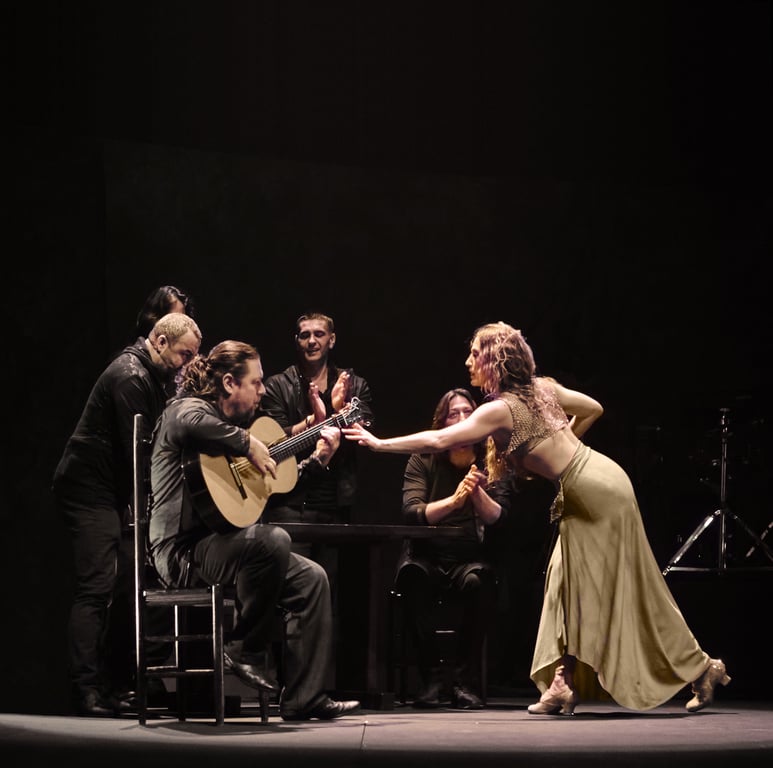
Dancing with a Fan: The Abanico in Flamenco
The abanico, or hand fan, is a flamenco dance prop used for sudden accents, flutters, and gesture, most closely tied to the graceful guajira. Here is how it works and where it belongs.
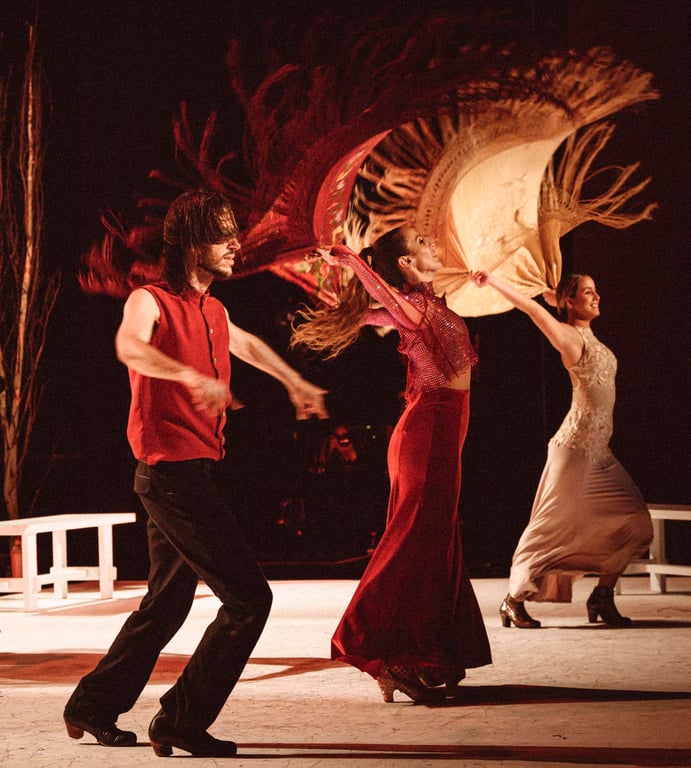
Dancing With the Manton: The Flamenco Shawl Explained
The manton de Manila is one of flamenco's most spectacular props: a large embroidered silk shawl with long fringe. Here is what it is, where it comes from, and how dancers learn to move with it.
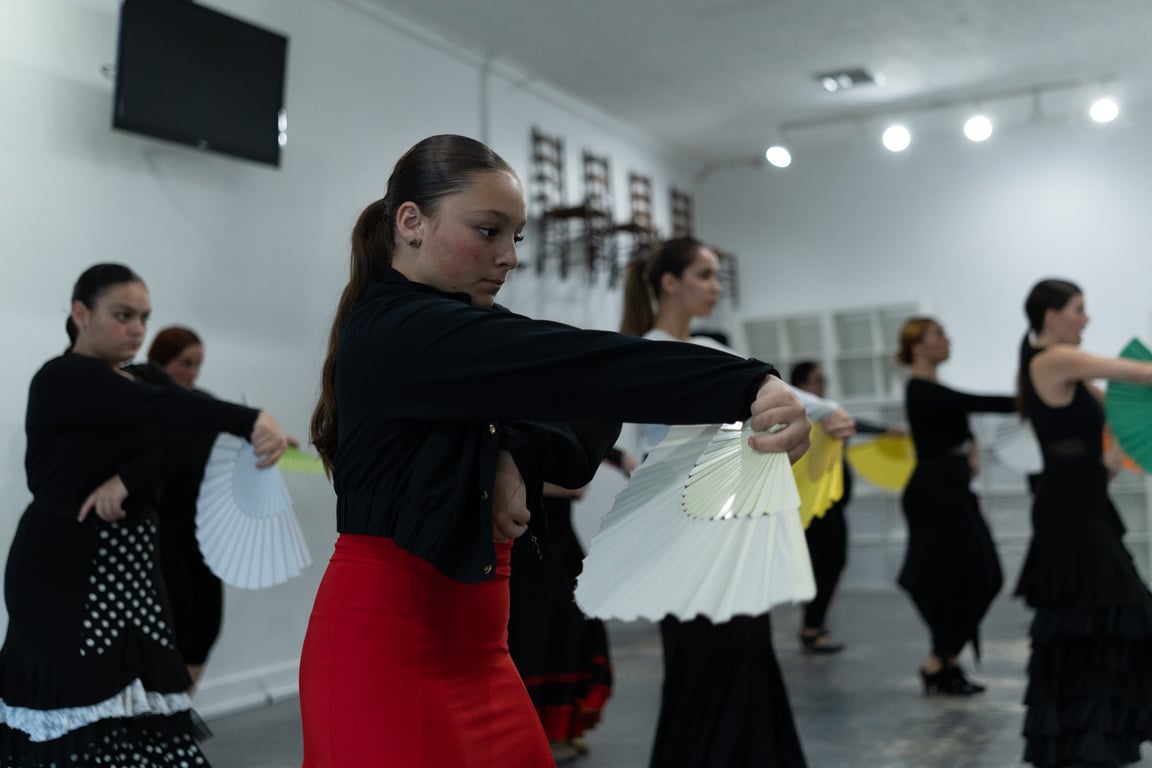
Flamenco Dance Moves: The Vocabulary of Movement Explained
The core flamenco dance moves defined clearly, from footwork and arms to calls, breaks, and closes, and how they combine within compas into a danced piece.
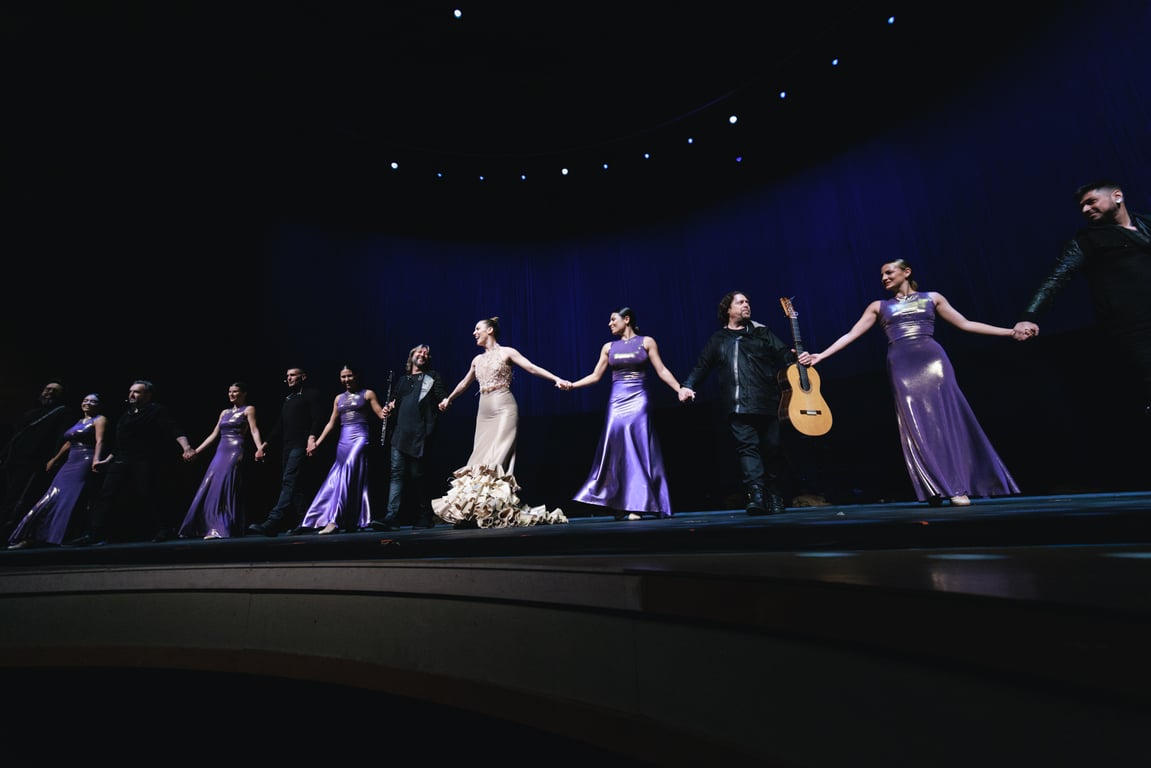
Flamenco Turns (Vueltas): The Three Types and How to Learn Them
A measured guide to flamenco turns, or vueltas: the three main types classified by axis of rotation, their roots in the escuela bolera, and how a beginner builds them through spotting and posture.
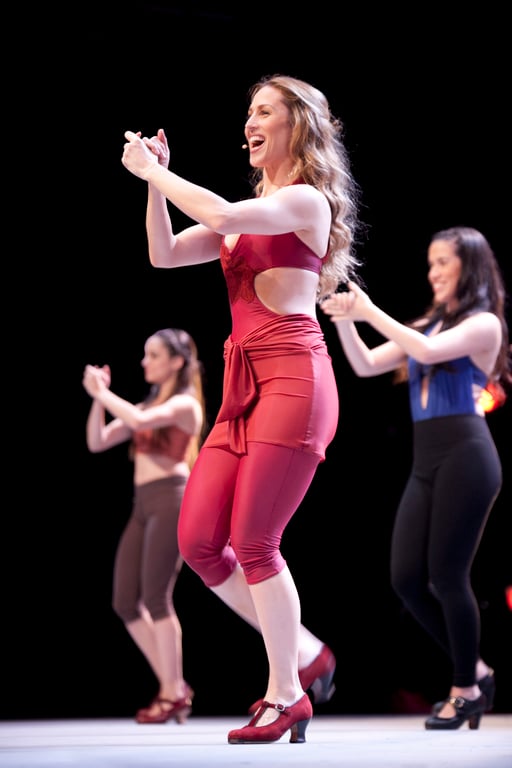
Flamenco Posture and Body: Building the Grounded Flamenco Stance
Before a single step, flamenco begins in the body. Learn the proud, grounded posture that makes braceo elegant, footwork clean, and your dancing look like flamenco.
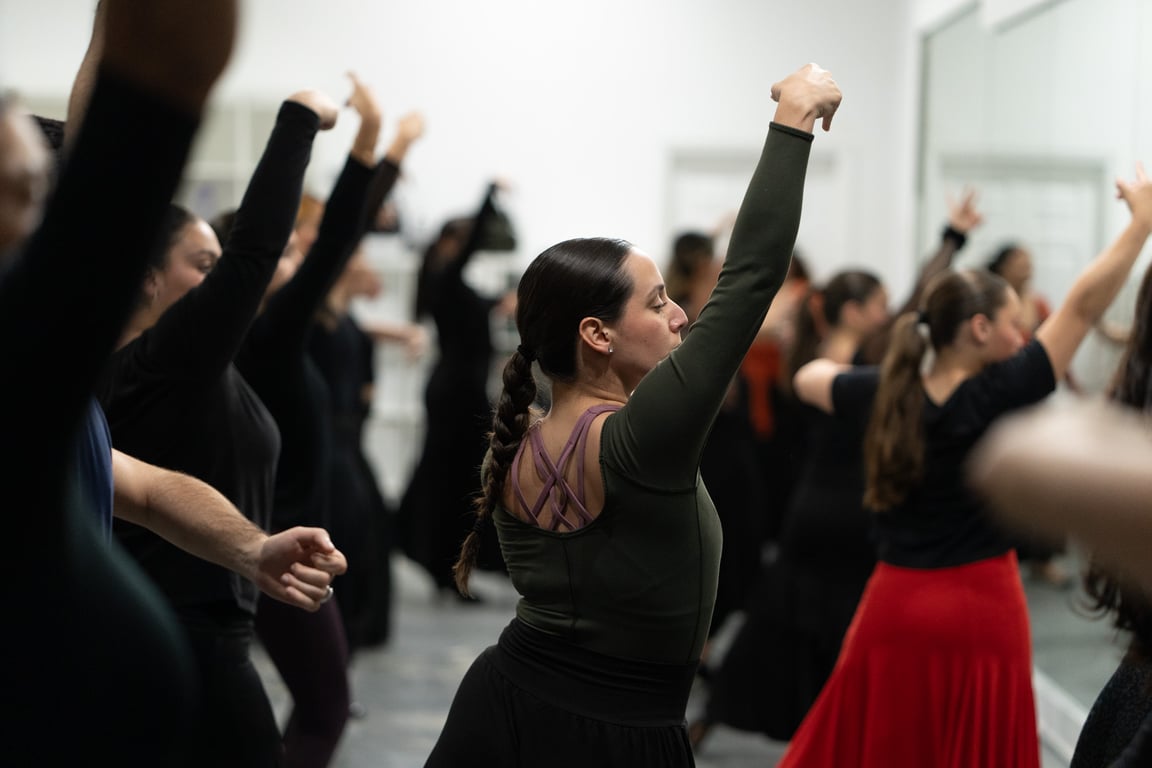
Flamenco Arms: A Beginner's Guide to Braceo and Floreo
Braceo and floreo give flamenco its unmistakable line. Here is how the arms, wrists, and hands really work — and why beginners should never neglect them.